
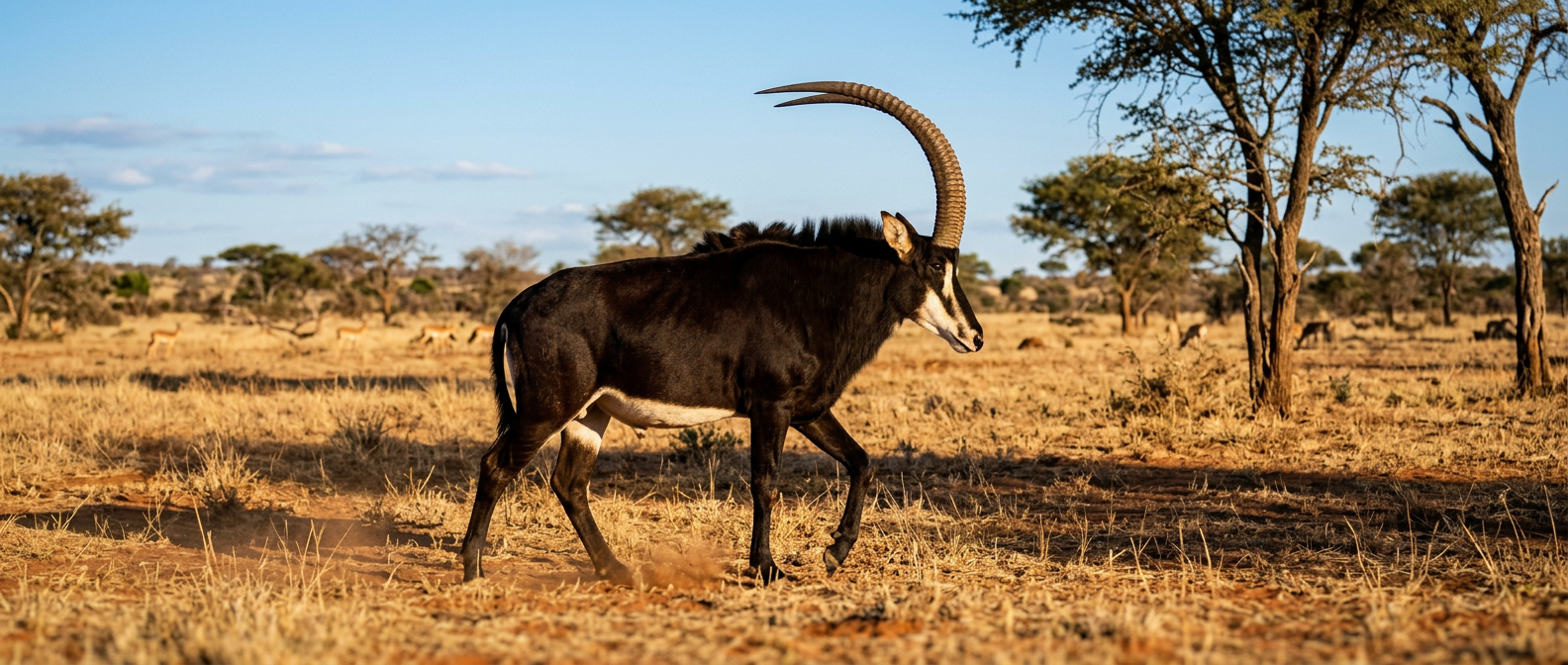
If you ask me, there are a lot of foolish people who are trying to influence working conservation programs for their own selfish agendas. These people, from the animal rights movement and from the world’s media, are doing their level best to discredit and destroy trophy hunting around the world. They see trophy hunting as wrong and cruel and oppose it at every opportunity but their attitude is based upon total ignorance of how conservation really works, of what trophy hunting really is and what trophy hunting really does. So this post will put forward some truths about trophy hunting, as opposed to the lies and blatant propaganda from the likes of the animal rights movement and from ill-informed, media personalities, like Ricky Gervais.
In taking their anti trophy hunting stance, the anti-hunters are also opposing many working and successful conservation programs. It is this ignorance, promoted by the animal rights brigade and their refusal to accept facts and scientific data, which has become one of the biggest threats to working conservation programs world-wide. They may have convinced themselves that they are fighting the ‘good fight’ but they are actually doing an enormous amount of damage to conservation programs and have, themselves, become a serious threat to wildlife. If you are not convinced, then please read on.
Here, in Part 1, I will mention some of the trophy-hunting related, conservation success stories that have saved wildlife species. In the Part 2 we will look at what happens when you ban trophy/sport hunting as we look at the wildlife disaster of Kenya. Finally, in subsequent parts to this post, we will look as some of the specific lies and myths that are generated, and propagated, by the animal rights crowd in a misguided attempt to destroy trophy hunting worldwide.
So let’s talk about some of the positive results of trophy hunting:
South Africa
Prior to the 1960’s, when the safari hunting industry began, wildlife numbers were extremely low in South Africa, as they were in many African countries. In 1960, South Africa had less than 600,000 wild animals across the entire country and these animals were mostly confined to National Parks. In most rural areas, wildlife was seen as a threat to agriculture and exterminated at every opportunity. In some cases, farmers employed full time shooters whose job was to remove all native animals that competed with, or threatened, their livestock or crops.
Then the safari hunting industry began to grow and farmers came to realise that wild animals were worth more, and were far easier to care for, than livestock and crops. Many farmers got rid of their cattle, stopped planting crops, pulled down internal fences, re-vegetated their land and even purchased more wild animals to repopulate their erst-while cattle farms. These game ranchers, as they had now become, make their living by selling off surplus game animals to other game areas or by selling the rights to hunt the surplus animals.
Now, around 50 years on, the number of wild animals in South Africa has expanded from under 600,000 to around 24 million. So successful, has the safari industry been, that around 25% of the entire country, and his does not include National Parks and other state-owned wildlife areas, is now associated with the wildlife industry and safari hunting. This level of success would never have been possible with photographic safaris alone.
The USA
At the end of the 1800s, American wildlife populations were at an all time low. Habitat loss and market hunting had decimated wildlife numbers and some species looked like they were headed for extinction. Note that this was NOT due to sport or trophy hunting. Indeed, American sport and trophy hunters, men like Theodore Roosevelt who would become the 26th President and who became known as the ‘Conservationist President’, fought to save these animals and their habitats and worked to put into place conservation measures, that included hunting. As a result of this work, by hunters, we have seen America’s wildlife recover dramatically.
To help fund these conservation activities, in 1937 American hunters, themselves, requested an 11% tax on hunting equipment to help fund conservation and this generates around $371 million each year. If you include hunting licenses and trophy fees then American hunters pay around $1.6 billion dollars every year into conservation. Now compare this level of funding for conservation, that comes from hunting, to the negligible funding provided by the animal liberation groups.
The animal rights organisation spend most of the millions, that they raise, on wages for their staff, ridiculous publicity stunts and on lots and lots of self-promotion. Animal liberationists spend virtually none of their money to actually help wildlife and aid conservation programs; but they certainly don’t advertise this fact! If you find this statement a little hard to believe, then you only have to examine the public financial statements of the various animal liberation organisations to see the truth for yourself and this will be the subject of a future post on this website.
The following list of successes demonstrates what hunter’s hard work and money has done for American wildlife.
At the start of the last century:
- There were only 41,000 elk left in North America but today there are more than 1 million elk,
- There were only 500,000 whitetail deer but today there are more than 32 million,
- There were only 100,000 wild turkeys but today there are more than 7 million,
- Ducks were scare but, due to restoration and conservation of wetlands by hunters, there are now more than 44 million ducks,
- In 1950 there were only 12,000 pronghorn antelope but today there are more than 1.1 million, and
- In 1950 there were only 7,000 polar bears but today there are around 30,000.
There are lots of other examples that show how trophy hunting aids and supports conservation in real and tangible ways. However, to discuss all of them would make this post far too long. However, other success stories can be found in Zimbabwe, Namibia, Mozambique, Tanzania and Zambia, to name a few. In addition, in recent years, many other African countries have started to adopt hunting programs as the realisation that bans on hunting do not stop habitat loss and poaching and that such bans only deny the much needed funding, and incentives, to save and preserve wildlife and wildlife habitat.
What the IUCN says about Trophy Hunting
The International Union for Conservation of Nature (IUCN) is the global authority on the status of the natural world and the measures needed to safeguard it. It is the parent organisation that all other organisations, concerned with real conservation, are either members of or they work with the IUCN. It is not a pawn for either the animal rights or for the hunting groups. The IUCN is mostly staffed by scientists and biologists and so the IUCN can be relied upon to present honest and truthful assessments.
So let’s just look at a couple of statements from the IUCN and it should be noted that there are more statements, that are positive in relation to trophy hunting, than you will read here. First of all, there is the statement by Rosie Cooney, who is the Chair of the Sustainable Use and Livelihoods Specialist Group (SULi) who said: